Hearing loss affects millions of people worldwide, and hearing aids are one of the most effective solutions to improve sound perception. But how do hearing aids work for the deaf, especially for individuals with partial or severe hearing loss? Modern hearing aids use advanced digital technology to amplify, process, and deliver sound in a way that matches the user’s unique hearing needs.
What Is a Hearing Aid?
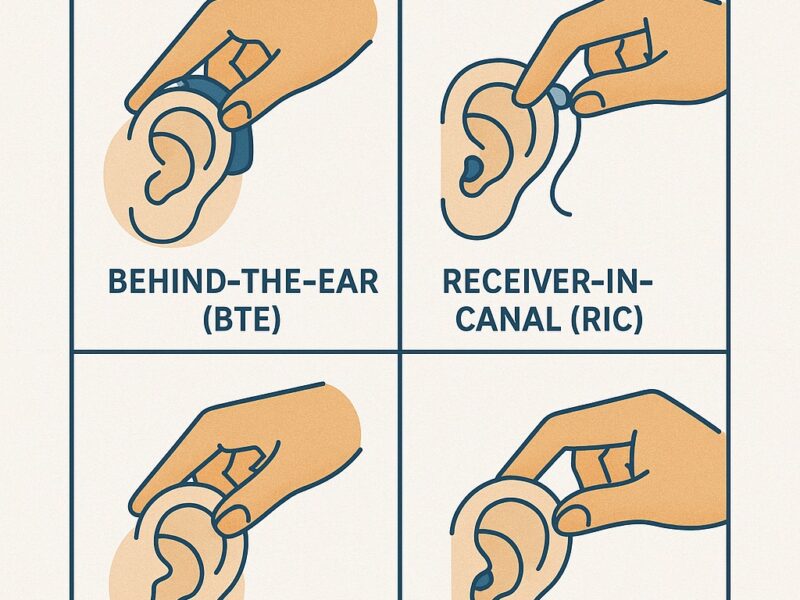
A hearing aid is a small electronic device designed to improve hearing by making sounds louder and clearer. It is typically worn either behind the ear or inside the ear canal.
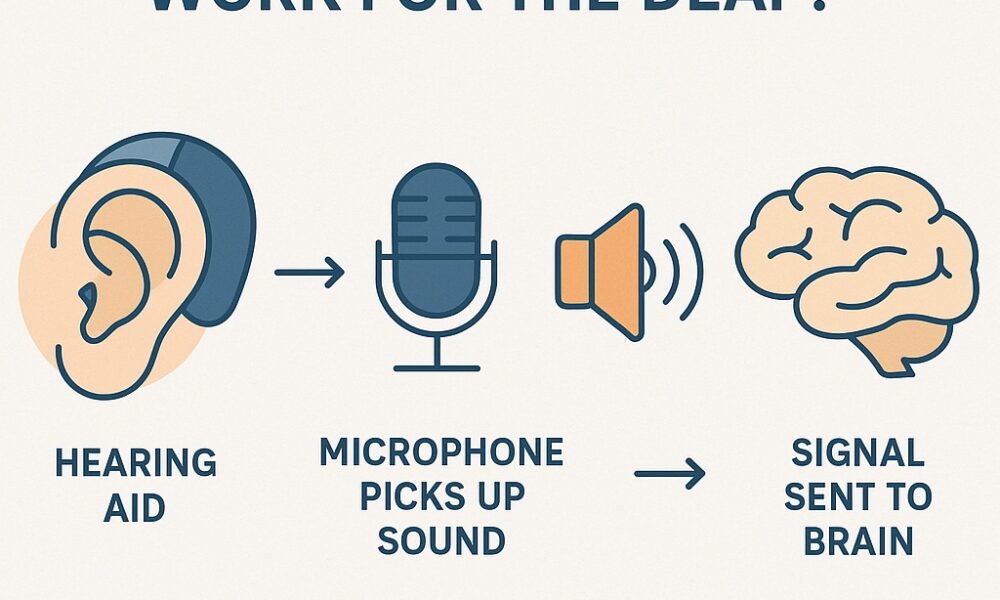
A Standard Hearing Aid Has Three Key Components:
- Microphone – Captures sound from the environment
- Amplifier/Processor – Converts sound into digital signals and enhances them
- Speaker (Receiver) – Sends the processed sound into the ear
Modern devices may also include Bluetooth, directional microphones, noise reduction algorithms, and AI-powered sound processing.
How Do Hearing Aids Work for the Deaf?
1. Sound Is Captured by the Microphone
The hearing aid starts working the moment sound enters the microphone.
It picks up:
- Speech
- Environment sounds
- Background noise
The microphone converts acoustic sound into electrical signals.
2. Digital Processing & Amplification
Once the sound enters the digital processor, the hearing aid analyzes it using sophisticated algorithms.
The processor performs tasks such as:
- Distinguishing speech from background noise
- Reducing wind or traffic noise
- Enhancing voices
- Adapting to indoor or outdoor environments
- Preventing sudden loud sounds from being painful
This is where modern hearing aids outperform older analog devices.
3. The Receiver Sends Sound Into the Ear
The processed sound is delivered through the receiver, reaching:
- The eardrum
- The middle ear
- The inner ear (cochlea)
From here, the auditory nerve carries signals to the brain.
If the person still has working hair cells in the cochlea, they will perceive sound.
Can Hearing Aids Help Completely Deaf People?
The honest answer: It depends on the type of deafness.
Hearing aids work best for:
- Mild hearing loss
- Moderate hearing loss
- Severe hearing loss (if some hearing ability remains)
Hearing aids do NOT work for:
- People who are profoundly deaf
- People with a non-functional cochlea
- People whose auditory nerve is damaged
In such cases, doctors commonly recommend cochlear implants, which work differently by bypassing the ear entirely and stimulating the auditory nerve directly.
Types of Deafness and Hearing Aid Effectiveness
1. Conductive Hearing Loss
This occurs when sound cannot reach the inner ear due to:
- Wax blockage
- Ear infection
- Damaged eardrum
Hearing aids work very well for this type.
2. Sensorineural Hearing Loss
This involves damage to the inner ear (cochlea) or the auditory nerve.
It is the most common cause of permanent hearing loss.
Hearing aids help moderately, depending on whether functional hair cells remain.
3. Mixed Hearing Loss
A combination of conductive and sensorineural issues.
Hearing aids are often effective, but treatment depends on diagnosis.
How Modern Digital Hearing Aids Improve Life for the Deaf
✔ Noise Reduction
Filters background noise to make conversations clearer.
✔ Directional Microphones
Focus on the person speaking in front of you.
✔ Feedback Cancellation
Reduces whistling sounds common in older devices.
✔ Bluetooth Connectivity
Connects to:
- Smartphones
- TVs
- Laptops
- Audio devices
✔ Rechargeable Batteries
More convenient and cost-effective.
✔ AI-Powered Sound Processing (Premium Models)
Learns user habits and environment to improve listening experience.
Limitations of Hearing Hids for the Deaf
Despite advanced technology, hearing aids are not a cure for deafness.
Common limitations:
- Cannot restore natural hearing
- Less effective for profound hearing loss
- May struggle in very noisy areas
- Require proper fitting and tuning
- Need time for the brain to adapt
Hearing Aids vs. Cochlear Implants
Many people confuse the two, but they are very different.
| Feature | Hearing Aid | Cochlear Implant |
| Works for | Mild–Severe loss | Severe–Profound loss |
| Function | Amplifies sound | Bypasses ear, stimulates nerve |
| Surgery | No | Yes |
| Cost | Lower | Higher |
| Best For | Users with remaining hearing | Those with near-total deafness |
Who Can Benefit Most from Hearing Aids?
Hearing aids are ideal for individuals who:
- Can hear some sounds but not clearly
- Struggle with speech understanding
- Have trouble hearing in noisy places
- Feel isolated or avoid conversations
- Have medical approval after a hearing test
How Audiologists Fit and Customize Hearing Aids
Getting the right hearing aid requires professional assessment.
Steps:
- Hearing test (audiogram)
- Ear canal examination
- Choosing the right model (BTE, ITE, CIC, etc.)
- Programming the device
- Testing speech clarity
- Follow-up adjustments
A well-fitted hearing aid provides the best results.
FAQs: How Do Hearing Aids Work for the Deaf?
1. Do hearing aids restore full hearing?
No. They improve sound but cannot recreate natural hearing.
2. Can a fully deaf person use hearing aids?
Only if they are not profoundly deaf and still have some hearing ability.
3. How long do hearing aids last?
Typically 3–7 years, depending on care and technology.
4. Are hearing aids painful to wear?
Modern devices are very comfortable after proper fitting.
5. Do hearing aids work instantly?
They work immediately, but the brain needs a few weeks to adapt.
Conclusion
Understanding how hearing aids work for the deaf helps individuals and families make informed decisions about treatment options. Hearing aids amplify sound, enhance speech, reduce noise, and help users reconnect with their environment—making communication easier and improving quality of life.
However, they are most effective for people who still have some natural hearing ability. For those with profound deafness, cochlear implants may be a better option.