
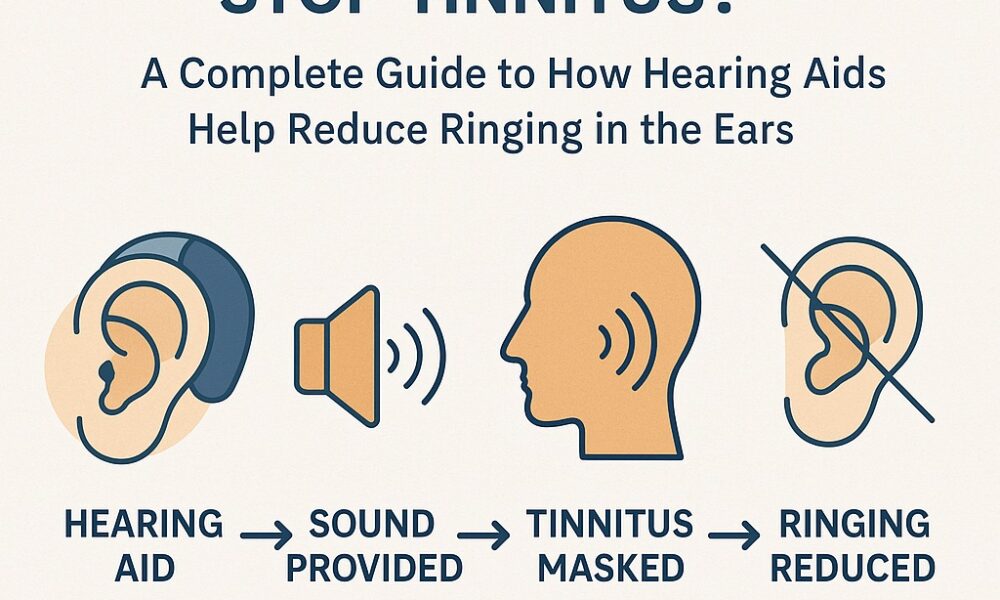
Tinnitus — the constant ringing, buzzing, hissing, or clicking in the ears — affects millions of people worldwide. For many, the condition becomes frustrating, disturbing daily life, sleep, work, and concentration. Because hearing loss and tinnitus often occur together, many people search for solutions that can relieve both.
One of the most commonly recommended treatments is hearing aids. But can a hearing aid actually stop tinnitus? Let’s break it down.
What Is Tinnitus?
Tinnitus is the perception of sound when no external sound source exists. It is not a disease, but a symptom of an underlying issue such as:
- Age-related hearing loss
- Noise exposure
- Earwax blockage
- Ear infections
- Medication side effects
- Nerve damage
- Stress or anxiety
Around 80–90% of tinnitus patients also have some level of hearing loss. This is why hearing aids are widely recommended.
Can a Hearing Aid Stop Tinnitus?
Short Answer:
A hearing aid cannot permanently stop tinnitus, but it can significantly reduce, mask, or manage tinnitus symptoms for many people.
Detailed Explanation:
Tinnitus is often caused when the brain tries to compensate for missing sound signals caused by hearing loss. Without enough sound input, the auditory system becomes overactive, creating phantom noises (tinnitus).
Hearing aids restore these missing sounds, allowing the brain to:
- Receive natural sound again
- Reduce the need to “fill in the gaps”
- Lower the perceived volume of tinnitus
- Improve focus and reduce stress
For many people, tinnitus becomes far less noticeable or even “disappears” while wearing hearing aids.
How Hearing Aids Help Reduce Tinnitus
Hearing aids are not just amplifiers — modern devices come with advanced tinnitus-management features.
1. Amplifying External Sound
By boosting everyday sounds, hearing aids:
- Reduce the contrast between silence and tinnitus
- Make the brain focus on real-world noise instead of the ringing
- Naturally mask tinnitus during daily activities
This is why tinnitus seems worse in quiet places—hearing aids solve that.
2. Built-In Tinnitus Masking Technology
Many hearing aids (Widex, Phonak, ReSound, Signia, Starkey) include tinnitus therapy programs such as:
- White noise
- Ocean waves
- Soft music
- Nature sounds
These sounds gently cover the tinnitus, providing relief.
3. Improving Brain Function & Sound Processing
Hearing loss reduces the brain’s ability to process sound.
Hearing aids:
- Strengthen neural pathways
- Reduce hyperactivity in the auditory cortex
- Help stabilize auditory signals
This can make tinnitus less intense over time.
4. Reducing Stress and Anxiety
Tinnitus often becomes worse due to:
- Stress
- Anxiety
- Poor sleep
Hearing aids help by:
- Making communication easier
- Improving quality of life
- Reducing mental strain
Lower stress = lower tinnitus.
Do Hearing Aids Cure Tinnitus?
No hearing device can cure tinnitus permanently because the underlying cause often remains.
However, 70–80% of patients experience major relief with hearing aids, especially those with hearing loss.
What You Can Expect:
- Tinnitus becomes softer
- Tinnitus becomes less noticeable
- Ringing becomes masked by environmental sounds
- Symptoms reduce over time with continuous use
Who Benefits the Most From Hearing Aids for Tinnitus?
Hearing aids work best for people who have:
- Hearing loss
- Age-related hearing decline
- Noise-induced hearing damage
- Constant or chronic tinnitus
Even mild hearing loss can trigger tinnitus, and hearing aids are extremely effective in these cases.
Types of Hearing Aids Recommended for Tinnitus
1. Hearing Aids With Sound Therapy
These include built-in relief sounds such as:
- Ocean waves
- Rain sounds
- White noise
2. Bluetooth Hearing Aids
Allow you to stream:
- Sleep sounds
- Relaxation music
- Guided meditation
3. Open-Fit Hearing Aids
Helpful for mild tinnitus and minimal hearing loss. They reduce “occlusion effect” and allow natural sound flow.
Alternatives & Additional Treatments for Tinnitus
Hearing aids work best when combined with other therapeutic options:
1. Sound Therapy
White noise machines, nature sounds, fans, and soft background audio.
2. Cognitive Behavioral Therapy (CBT)
Helps reduce emotional reaction to tinnitus.
3. Tinnitus Retraining Therapy (TRT)
Trains the brain to take attention away from the ringing.
4. Stress & Sleep Management
Relaxation, meditation, and sleep routines.
5. Lifestyle Adjustments
- Avoid loud noise
- Reduce caffeine
- Avoid ototoxic medicines
When Hearing Aids May Not Help
Tinnitus caused by:
- TMJ disorder
- Medication
- Earwax buildup
- Medical conditions (Meniere’s, infections)
…requires treating the underlying problem first.
Always consult an ENT specialist.
Frequently Asked Questions (FAQs)
1. Can a hearing aid completely stop tinnitus?
It cannot permanently stop it, but it can significantly reduce or mask tinnitus.
2. How quickly do hearing aids help tinnitus?
Most people notice improvement within a few days to a few weeks.
3. Are hearing aids the best solution for tinnitus?
Yes — for individuals with hearing loss, hearing aids are the #1 recommended treatment.
4. What type of hearing aid is best for tinnitus?
Hearing aids with built-in sound therapy programs or Bluetooth streaming provide the best relief.
5. Do cheap hearing aids help tinnitus?
Low-cost amplifiers may worsen tinnitus.
Professional hearing aids are far more effective.
Conclusion: Can a Hearing Aid Stop Tinnitus?
A hearing aid cannot cure tinnitus, but it is one of the most effective solutions available today.
By restoring natural hearing, masking unwanted noise, and improving overall sound clarity, hearing aids help reduce tinnitus intensity and improve quality of life.
For many people, the ringing becomes:
- Softer
- Less frequent
- Less noticeable
- Easier to manage
If you experience tinnitus along with hearing loss, consulting an audiologist for hearing aids is one of the most trusted and proven ways to find relief.