
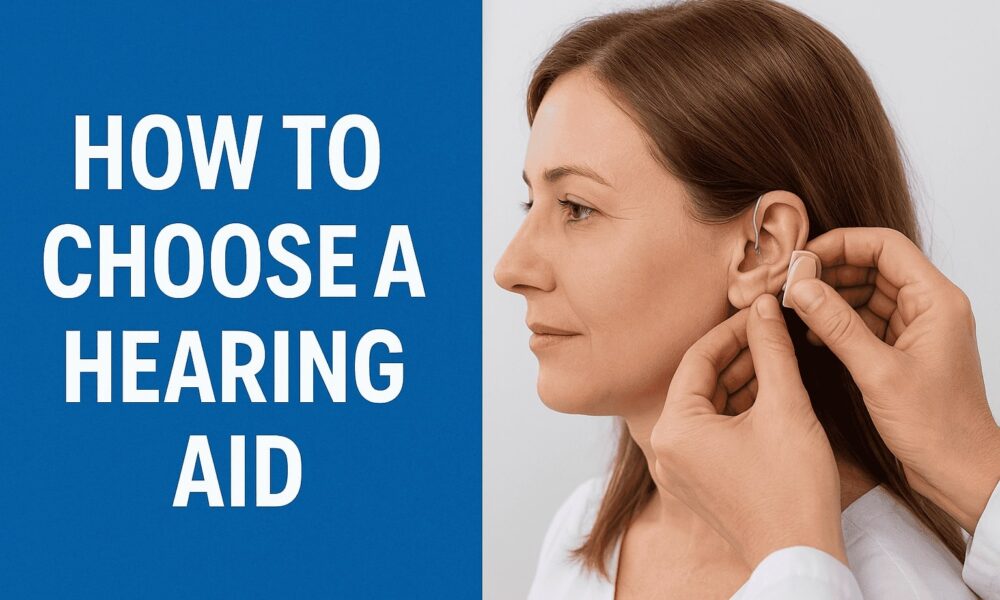
Hearing loss is a common condition affecting millions of people worldwide. Modern hearing aids have made it possible for individuals with hearing difficulties to regain clarity and confidence in communication. However, choosing the right hearing aid can feel overwhelming due to the variety of options available..
1. Understand Your Hearing Loss
Before exploring hearing aid options, it’s essential to know the extent and type of your hearing loss. Hearing loss is typically classified as:
- Mild: Difficulty hearing soft sounds or following conversations in noisy environments.
- Moderate: Struggling to hear normal speech and certain consonant sounds.
- Severe: Limited hearing; may only perceive very loud sounds.
- Profound: Minimal hearing; may require alternative communication methods.
A professional audiologist can perform a hearing test to determine your exact hearing range and recommend suitable hearing aids. This ensures you choose a device tailored to your specific hearing needs.
2. Types of Hearing Aids
Hearing aids come in different styles and designs. Understanding these options will help you select one that fits comfortably and discreetly.
a. Behind-the-Ear (BTE)
- Fits behind the ear and connects to an ear mold in the ear canal.
- Suitable for mild to profound hearing loss.
- Larger in size but powerful and durable.
b. Receiver-in-Canal (RIC) / Receiver-in-Ear (RITE)
- Small device behind the ear with a wire leading to a receiver in the ear.
- Lightweight and less visible than BTE.
- Suitable for mild to severe hearing loss.
c. In-the-Ear (ITE)
- Custom-fit to the outer ear.
- Suitable for mild to severe hearing loss.
- Easier to handle than smaller devices.
d. In-the-Canal (ITC) and Completely-in-Canal (CIC)
- Fits partially or completely inside the ear canal.
- Less visible and cosmetically appealing.
- Suitable for mild to moderate hearing loss.
- Smaller size may make handling and battery changes slightly more challenging.
e. Invisible-in-Canal (IIC)
- Fits deep inside the ear canal and is virtually invisible.
- Ideal for mild hearing loss.
- Not suitable for individuals with severe hearing impairment.
3. Consider Your Lifestyle and Environment
Different hearing aids are designed to perform better in specific environments. Consider your daily activities:
- Work in noisy environments: Look for devices with advanced noise reduction and directional microphones.
- Active lifestyle: Choose water-resistant and sweat-proof hearing aids.
- Frequent phone or media use: Consider devices compatible with Bluetooth for hands-free calls and audio streaming.
4. Features to Look For
Modern hearing aids offer numerous features. Select features based on your lifestyle and hearing needs:
- Rechargeable batteries: Convenient and easy to maintain.
- Bluetooth connectivity: Stream music, calls, or TV audio directly to your device.
- Noise reduction: Enhances speech understanding in noisy environments.
- Directional microphones: Focus on sounds in front of you while reducing background noise.
- Telecoil (T-coil): Useful for hearing loops in public spaces like theaters or churches.
5. Fit and Comfort
Comfort is crucial since you’ll wear your hearing aid for hours. Consider:
- Ear shape and size: Custom-fit devices provide better comfort and sound quality.
- Weight: Lighter devices are easier to wear for long periods.
- Adjustability: Some hearing aids allow you to fine-tune settings for comfort and sound clarity.
6. Trial Periods and Warranties
Most audiologists offer a trial period. Use this period to:
- Test comfort and fit.
- Assess sound quality in different environments.
- Make adjustments with your audiologist.
A warranty is equally important—it covers repairs and replacement in case of defects or damage.
7. Work with a Professional Audiologist
Selecting a hearing aid isn’t just about the device—it’s about the support you receive:
- An audiologist can provide a comprehensive hearing evaluation.
- They will help program and fine-tune your hearing aid for optimal performance.
- Ongoing follow-ups ensure your hearing aid continues to meet your needs over time.
Final Thoughts
Choosing the right hearing aid is a personal and important decision that can significantly improve your quality of life. By understanding your hearing loss, exploring different types of devices, considering your lifestyle, and consulting with a professional audiologist, you can find a hearing aid that brings clarity, comfort, and confidence back to your daily life.
Investing in the right hearing aid is more than just wearing a device—it’s a step toward reconnecting with the world around you.